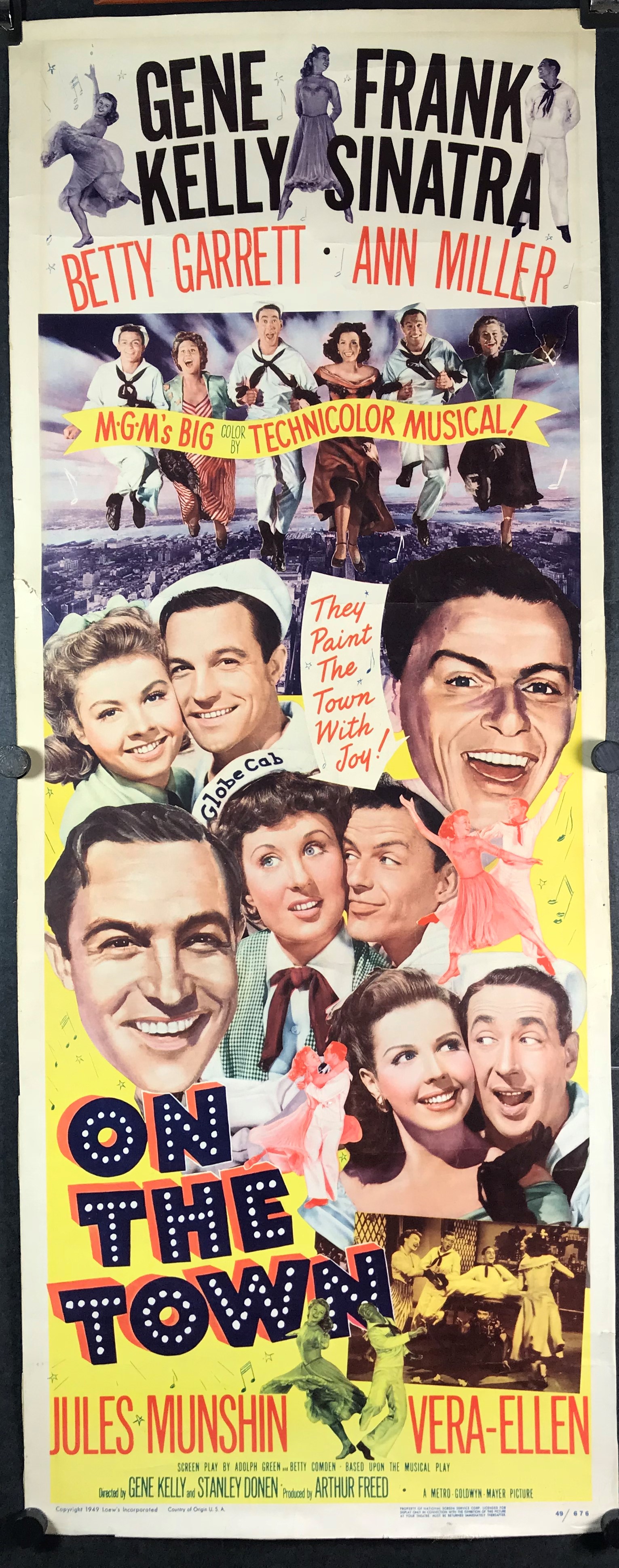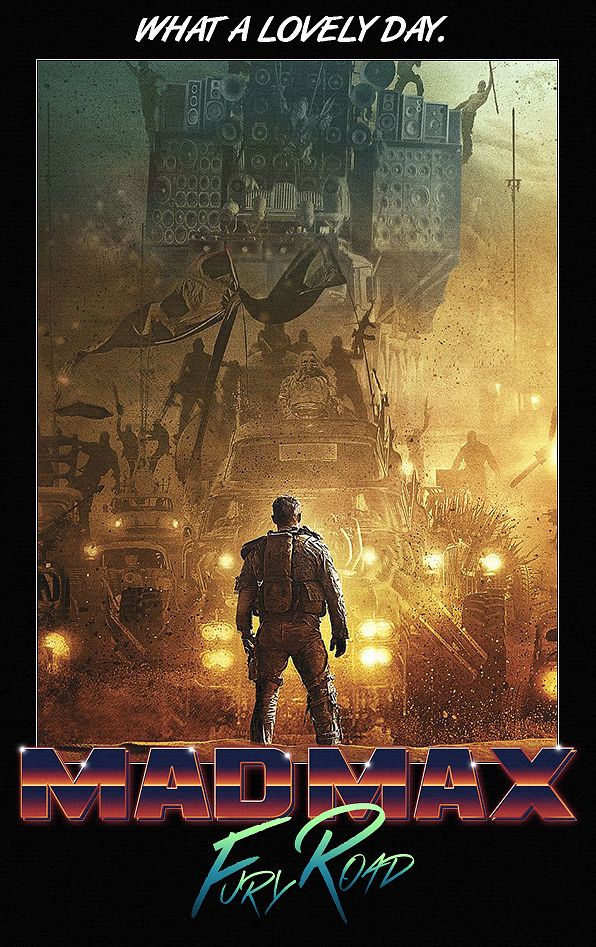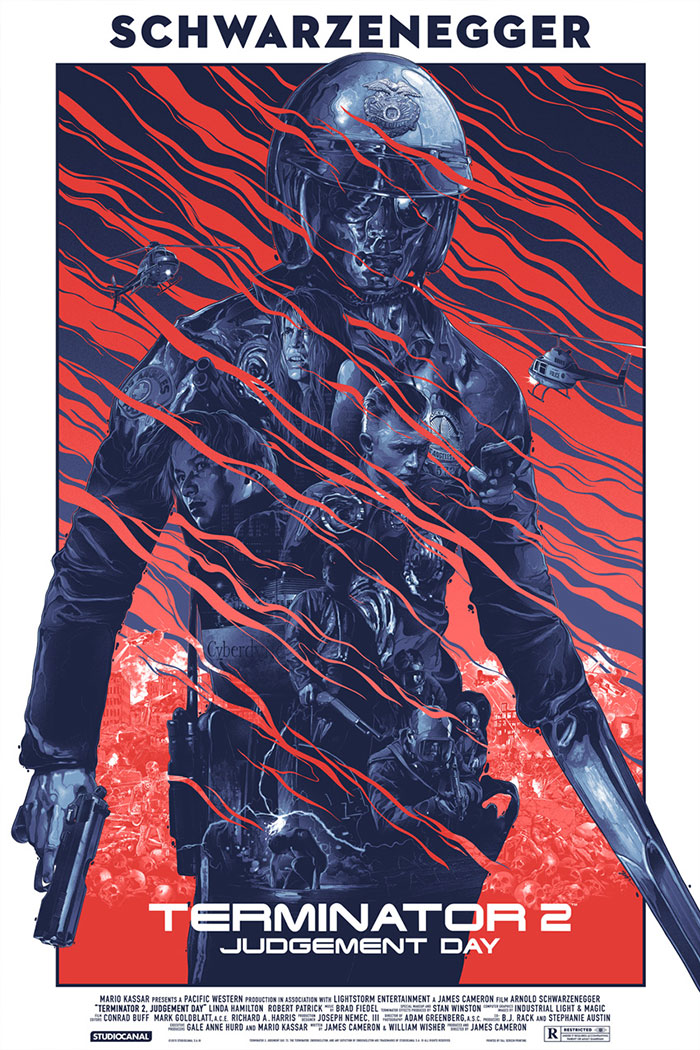
Quote of the week: Williams on “the new social world”

The critical demystification has indeed to continue, but always in association with practice: regular practice, as part of a normal education, in this transforming labour process itself: practice in the production of alternative ‘images’ of the ‘same event’; practice in processes of basic editing and the making of sequences; practice, following this in direct autonomous composition.

We shall already have entered a new social world when we have brought the means and systems of the most direct communication under our own direct and general control. We shall have transformed them from their normal contemporary functions as commodities or as elements of a power structure. We shall have recovered these central elements of our social production from the many kinds of expropriator. But socialism is not only about the theoretical and practical ‘recovery’ of those means of production, including the means of communicative production, which has been expropriated by capitalism. In the case of communications, especially, it is not only, though it may certainly include, the recovery of a ‘primitive’ directness and community. Even in the direct modes, it should be institution much more than recovery, for it will have to include the transforming elements of access and extension over an unprecedentedly wide social and inter-cultural range. — Raymond Williams, from “Means of Communication as Means of Production”

If I were ever to teach a class on film, this would probably be a required text. Williams goes a long way toward clarifying the social importance to every level of society of understanding media. ☕


The Winter 2013 anime review

spacebros2

Apart from my reading schedule, the most media I’ve consumed in the last few months has mainly been anime. Since anime has comprised most of my entertainment diet, and since the 2013 winter season ended just a few weeks ago, here’s a set of capsule reviews of the stuff I’ve been consuming… Continue reading


The sliding scale to movie hell

The last time I ranted peremptorily about Star Trek Into Darkness, the conversation in the comments reminded me that not everyone agrees what Star Trek was or should be. Yet the opening lines in this early review only reinforces my curmudgeonly stance toward the rebooted franchise. See if you can spot where the problem lies:

How quickly a steady starship can veer off-course. JJ Abrams’ brainy, ballsy 2009 reboot of Trek has given way to a shallow, shrill, all-action sequel that reduces the characters to parodies. The camaraderie between Kirk (Chris Pine) and Spock (Zachary Quinto) now makes no sense: one is a risk-taking, rule-breaking rascal, the other’s a whiny geek; their dynamic brings to mind a socially inept schoolkid who thinks his bully is his friend. Scotty, Chekov and McCoy are just silly voices in uniforms, and beyond demonstrating her fluent Klingon, Zoe Saldana’s Uhura gets little to do except wonder why her pointy-eared boyfriend is bad at discussing his feelings (d’uh!).

If Nick Dent didn’t specifically mention in the second sentence that this is a review of the 2013 sequel, I would’ve thought this to be a near-perfect encapsulation of the first reboot. The fact that he regards Star Trek 2009 as “brainy” and “ballsy” compared to Into Darkness suggests that film critics have had to hire the Army Corps of Engineers to construct a ladder down to Hell to find a place low enough to set the bar for what counts as brainy and ballsy. Perhaps that’s another reason why the love for ST09 pisses me off so much. It’s not that I’m against enjoying big, dumb summer blockbusters. But when a big, dumb summer blockbuster rolls off the Tinseltown assembly line and it’s directed by Michael Bay, it is what it is, and is recognized (and most often derided) as such. When it’s directed by J.J. Abrams, it’s brainy and ballsy, though no smarter or technically more proficient. Apparently J.J. Abrams’s Star Trek is now a golden standard by which we measure summer blockbusters, so much so that even his own sequel can’t measure up. This, ladies and gentlemen, is the sliding scale to movie hell. I’m not, by the way, using this review to confirm whether or not Star Trek Into Darkness is really as bad as I’d feared; it may, contra whatever this critic says, be a very good film. That’s the not the point. The point is that I don’t think Dent is alone in his perspective on Abrams’s Star Trek. The point is that we’ve lost our cultural moorings where it comes to establishing benchmarks for taste and accomplishment. When the first film — which itself was a shallow, shrill, all-action reboot of a franchise that was initially intended by its creator to be the opposite — now towers above its successor as a model of depth, restraint, and thrills, it’s pretty clear to me that we expect nothing from our entertainment, and we therefore get nothing in return. Except we call it an embarrassment of riches when the next-worst thing comes out a few years later. No wonder Purgatory looks so enticing if you see it from a subjacent angle.

Via Opus. ☕


In praise of controversy

When Roger Ebert died a couple weeks ago, movie fans around the world mourned. Most eulogies ranged from respectful overviews of his life and work to moving testimonials extolling his prose and insight. I may have been remiss in not commenting immediately on his passing, since his absence does indeed leave a large void in the profession of film criticism, but what I’ll miss most about Ebert has somewhat to do with his accomplishments, and somewhat to do with the particular role he played in pop culture. These two things are related, but not the same. Those of you who have been reading my blog for a while know that when I’ve mentioned Ebert, it has not always been in a flattering way. Don’t misunderstand what I’m about to say: I did appreciate his work, and he was a skilled critic. What we’ve lost, however, isn’t a good film critic but rather the only film critic in America (possibly the world) who mattered to the moviegoing public.

Lots of people read reviews. They visit Rotten Tomatoes or perhaps they follow their local paper’s resident critic; maybe there’s a blogger they particularly like, or maybe they just have that one Facebook friend who reliably gives the lowdown on everything s/he’s seen recently. There are still dozens — hundreds — of critics of Ebert’s caliber out there, and there are several that I frankly enjoy more than him. The thing about Ebert is that he came along at exactly the right moment in our culture to carve out a specific kind of persona. For a variety of reasons, not all of them having to do with his actual prose or personality, Ebert became the archetype of the Critic we all imagine when we think of those sitting in a darkened theater with pen and paper a week or two days before the release of a movie, ready to praise or savage it for their public. For the most part, Ebert was perceived as a benevolent sage, as opposed to an Addison de Witt, and this was an image he earned. However, his unique status as America’s preeminent film critic enabled him to attract a great deal of attention whenever he espoused views that weren’t always enlightened or ingratiating with the majority of his readership. Being the only film critic in the world who mattered to Joe Public meant that he was also virtually the only film critic in the world who could generate controversy simply by stating his opinion. (Sorry, Armond. Only haters and intrigued contrarians like me care what you think.)

Thinking back over the last twenty years or so, it’s difficult to think of many mainstream critics who have done anything that drew attention to the substance of their opinions by created anything resembling a controversy. Even if Ebert wasn’t the one to create the controversy, he usually benefitted from it. I recall when David Lynch’s Lost Highway came out, advertisements ran in the newspapers bragging that Siskel and Ebert had given it two thumbs down, which prompted a conversation about the relevance of critics and the way they resonated with various audiences. A popular YouTube video shows the pair debating with John Simon the merits of Return of the Jedi; the fact that this video is making the rounds thirty years after it was broadcast indicates that there’s a certain amount of stock in the fact that critics came to verbal blows over what is now a touchstone film in popular entertainment. Not just any critics; Siskel and Ebert.

There were similar mini-controversies from just the last decade. Remember the kerfuffle over Ebert’s four-star review of Knowing, which prompted not one but two further blog posts defending his opinion? Then there was the incident in which he reviewed a movie without having watched the entire thing, being forced to walk back his scathing review later. How about his not-entirely-unfair tweet about “Jackass” Ryan Dunn’s death? And, of course, there was his dismissal of video games as art. The point isn’t that Ebert was right or wrong in any of this stuff. The point is that when anybody but Ebert says or does stuff like this, the only people who care are probably hardcore cinephiles who thrive on manufacturing topics for debate. But when Ebert says it, it reaches a larger circumference of the public sphere. At least, it did. Now that Ebert is gone, there is nobody who occupies that particular place in American culture.

Much as I often lament the level of vitriol that passes for discourse these days, there is something to be said for having someone who stirs the pot productively — a provocateur who can bring attention to issues and generate actual debate, as opposed to name-calling and fiery denunciations of a truly Puritanical order. Public debate needs controversy to a certain extent. Not a culture war, per se, but issues framed in such a way as to amply demonstrate to the average citizen that s/he has a stake in whichever direction the issue is taken. Ebert did that for the movies. He knew that movies mattered, and he devoted his life to illustrating that as clearly as he was able. In that endeavor, I think his legacy was of success. But the degree to which that legacy remains immediate and relevant to the further evolution of motion pictures within our culture is anything but set in stone. With Ebert around, we always had a focal point around which to orient the larger discussion. With him gone, that responsibility falls to all of us with a vested interest in the subject, but none of us has the cachet he did. It is now incumbent upon the cineastes and cinephiles of the world to uphold Ebert’s legacy. As discourse wanes, so does the memory of his life’s work; let his death be commemorated by the continuing conversation. ☕


Doctor Who Series 7 ☕ “Hide”

Doctor Who Hide 1

“Hide” is probably not going to be remembered as a New Who classic the way “Blink” will be, but it has my vote for the best story of series 7 thus far. While I greatly admired “Asylum of the Daleks,” Moffat tried to pack oodles and oodles of stuff into it, and as a result, it felt a bit overstuffed, even if it did put its finger on a couple key veins running throughout the series and tap them brilliantly. “Hide” is also a bit overstuffed, but it feels complete and satisfying in a way that none of the other episodes has so far. (Kudos to writer Neil Cross for nailing the second time out!)

Charlie Jane Anders complains a bit that “Hide” exemplifies the trend in recent Who that “every story is a love story.” A true enough observation, but in the case of this particular episode, I don’t see it as a weakness. On the contrary, I think it grapples with this theme rather meaningfully while delivering some grand moments. (Spoilers after the jump!)

Continue reading


George Lucas, filmmaker of the millennium?

While I presume that most of you have seen the Star Wars prequels, I expect that many of you have not heard of Camille Paglia, who thinks that Star Wars: Episode III – Revenge of the Sith is the greatest work of art in the last thirty years. My ignorance is great, and therefore I hadn’t heard of Paglia until Sonny Bunch referenced her in a confession of his ten biggest blown judgment calls from the past decade. The interview to which he linked is long on art snobbery and short on art discussion; nerds the world over excerpted Paglia’s comment that asserts quite a place for George Lucas on the Iron Throne of contemporary culture:

Yes, the long finale of Revenge of the Sith has more inherent artistic value, emotional power, and global impact than anything by the artists you name. It’s because the art world has flat-lined and become an echo chamber of received opinion and toxic over-praise. It’s like the emperor’s new clothes—people are too intimidated to admit what they secretly think or what they might think with their blinders off.

The interview was conducted in the wake of Paglia’s book, Glittering Images, which concludes with a chapter aggressively defending and reframing Lucas’s stature as an artist and his life’s work as a cultural touchstone. In reviewing the book, New York Times Sunday Book Review critic John Adams retorted:

There is something deeply depressing about having to argue over the cultural dominance of an immensely successful and beloved filmmaker like George Lucas in the context of art history. In anointing Lucas, Paglia has signed on to a currently popular thesis that blames serious artists who, because of their arrogance, have lost touch with the general public and brought about their own marginalization. This argument claims that the conventional fine arts have diminished in significance, leaving only those innovators who have “embraced technology” as worthy of our attention. This is a thin thread on which to hang the appraisal of a living artist. A “technology” is no more than a way of doing something, a means to an end, and throughout history artists have been stimulated by new technological and conceptual ideas. [...] What matters is not the technology itself (and your 9-year-old will tell you that the original “Star Wars” films look fairly clunky by today’s standards). What speaks to us in a work of art and makes it resistant to the passage of time is the depth of the humanity it expresses. There is entertainment, and then there is something infinitely richer: what we call “the sublime,” the true rec­ord of our spiritual condition that we get from serious and complex artworks. The films of William Kentridge, the serene Land Art of Andy Goldsworthy, the paintings of Anselm Kiefer, “Einstein on the Beach” — all these are sublime. “Star Wars” is not.

At first glance, this entire micro-conflagration threatened to overflow the banks of the River Pretension into the Flood Plain Bullshit. Neither Paglia’s Vice interviewer, Sean Craig, nor Adams bothered to press the case for or against the film itself. It was simply taken for granted by Craig that Paglia must be onto something when she asserts that Episode III is one of the greatest works of art ever made, just as it was taken for granted by Adams that, simply put, it’s not.

I’m fully aware of the stakes within geekdom. On my side are the haters, those who have a myriad of problems with the prequels, much of which is borne of an overattachment to nostalgia (the original trilogy was better because we imprinted on it first), but a lot of it stemming from Lucas’s hackneyed handling of cliches he did so much to inject into the mainstream. A big sticking point with me is that Anakin’s conversion to the Dark Side never feels authentic; it is a plot point shoehorned into by plot necessity, with weak writing undercutting character development at every turn. On the other side are those who either genuinely love the prequels (and many of them are younger, never having grown up with the original trilogy like my generation did, and who are utterly besotted with the digital f/x while being turned off by the dated look of the Episodes four through six) or who forgive their flaws because… well, those battle scenes are freakin’ sweet. Or so they say.

Then, of course, there are those who patrol the murky waters of academic criticism, like Paglia. Opponents in that realm are much more attuned to larger ramifications like Lucas’s famed reliance upon world mythology or the implicit critiques of our various political systems. Generally speaking, Lucas has enough fans across the spectrum — low, middle, and highbrow — to ensure that all six parts of the Star Wars saga will remain ensconced in the minds of at least another generation or two. My side has effectively lost this cultural skirmish in populist terms, even though I suppose the ivory tower set has our back for different reasons.

But even the biggest fans of the prequels would rarely venture to say that Episode III is, like, the best thing EVER (in living memory), which is why Paglia’s comments in interviews (like this one) generated heated discussion. What I needed to know was why the hell such a mediocre film grabbed a famous art critic’s attention and blew her mind. Fortunately, a simple Google search sated my curiosity (as it often does). Paglia published an adapted excerpt of the Episode III chapter from her book in The Chronicle of Higher Education. In it, she states her case that Lucas’s wedding of technical innovation to his artistic imagination is essentially a perfect union of vision and craft; though she doesn’t acknowledge it as such, it is a strikingly auteurist piece of criticism, with all the strengths and drawbacks that entails.

Note that it’s not necessarily the entire film that raptured Paglia to fangirl heaven, but the climactic duel between Obi-Wan and Anakin in particular:

A miniature set (at 1132 scale) of Mustafar’s craggy black landscape was carved out of foam on a massive platform, which was raised so that the 40-foot-long lava river (composed of 15,000 gallons of the translucent food additive methylcellulose, tinted bright yellow) could be under-lighted to glow fiery red and burnt orange. Then the entire platform was tilted so that the river, recycled by a pump system, would flow. Clumps of ground cork simulated floating lava crust, while real smoke was fanned overhead. The result was a collaborative triumph of modern installation art.

The Mustafar duel, which took months of rehearsal, with fencing and saber drills conducted by the sword master Nick Gillard, was executed by Hayden Christensen and Ewan McGregor at lightning speed. It is virtuosic dance theater, a taut pas de deux between battling brothers, convulsed by attraction and repulsion. Their thrusts, parries, and slashes are like passages of aggressive speech. It is one of the most passionate scenes ever filmed between two men, with McGregor close to weeping. The personal drama is staged against a physical one: Wrangling and wrestling, Anakin and Obi-Wan fall against the control panels of a vast mineral-collection plant, which now starts to malfunction and fall to pieces. As the two men run and leap for their lives, girders, catwalks, and towers melt and collapse into the lava, demonstrating the fragility of civilization confronted with nature’s brute primal power.

We could debate the validity of Paglia’s interpretations of the mise-en-scene. The way she Armonds the production design into a nature/civilization dichotomy is an interesting tangent that she doesn’t bother to justify, as are most of her observations about the film. That said, it’s apparent that she’s given the matter a lot of thought, and as criticism, it’s a great performance. Especially if considered from an auteurist perspective, it’s easy to understand why George Lucas, of all people, emerges for Paglia as the most significant figure in contemporary art. The man’s impact on pop culture has been seismic, and, narratively speaking, the Mustafar battle is arguably the lynchpin of the works for which Lucas will be remembered. Couple that with Paglia’s implication that the industrialist figure is an artist of a peculiarly late-capitalist kind, turning mass production and technological advance into his palette, with postmodern society as his canvas, and you do have a pretty strong (if unintentionally cynical) case that Lucas is the pre-eminent artist of the most pre-eminent art form of the early 21st century. Only a cineaste Tony Stark could have created something like Episode III’s climax, therefore Iron Man is the filmmaker of the century. Or something to that effect.

It’s an incredibly Marxist argument, even if it subverts every conclusion you might expect a Marxist to draw from the success of the Star Wars saga. For Paglia, the pudding’s proof is in the detailed litany of material factors at play. The cameras, the models, the toys, the Lucas family history, the worshipfulness of consumers… Paglia’s essay is a sort of masterpiece of interpretation factual material details as artistically significant in themselves. But she neglects style. For someone whose background is art history, the lack of detail in her discussion of things like composition, the juxtaposition of edits, the significance of the sound design — it’s all a bit vague. It’s like she’s aware that all these things exist, yet what’s most important is her idiosyncratic understanding of what Lucas is “saying” with Revenge of the Sith’s climax. It’s the sort of thing an amateur blogger like me can sort of get away with, provided nobody out there has the energy to call him on it, but it’s not the sort of thing a renowned academic — especially one so assiduously contrarian — can or ought to get away with.

Star Wars: Episode III – Revenge of the Sith may very well be a the supreme (or sublime) expression of George Lucas as an artist, but that doesn’t necessarily mean it’s a great film or a great work of art. Hundreds of shoddy or meh films have been made by unique artists; the singularity of an artist’s vision doesn’t guarantee greatness or quality, even if it is of interest to those who find such a vision to be appealing or fascinating. It’s telling that Paglia’s apology of Episode III concludes not with a summation of the film’s artistic strengths, but with a biographical gloss on the relationship between the saga and the man who wrought it: “The exquisite tenderness with which strong men handle babies here surely reflects Lucas’s own experience as a single parent who retired for two years to raise the first of his three adopted children. “Expand our universe!” Lucas commands his artists and technicians. He is a man of machines yet a lover of nature, his wily persona of genial blandness masking one of the most powerful and tenacious minds in contemporary culture.”

Absent the protestations of a true believer (who would likely argue for no more or less than for the prequels being solid entertainment), there are two prevailing defenses of the Star Wars prequels offered by thoughtful fans at the moment. One, the auteurist defense, argues that because the films adhere to or explicate Lucas’s grand artistic vision, they achieve greatness. This appears to be Paglia’s quintessential argument. Two, the relativity defense, argues that the prequels may not be masterpieces (especially in relation to the beloved original trilogy), but they’re not as terrible as haters make them out to be, and Episode III is the best of them.

The Star Wars prequels have certainly raked in tons of money, and tons of people enjoyed forking over cash for tickets and rewatching them on DVD. McDonald’s has probably served more cheeseburgers than any other restaurant chain, but any beef connoisseur will tell you that, yes, 22 billion people can be wrong. The success of McD’s is a testament to the shrewdness of Ray Kroc’s business model, not his skill as a gourmet. Just as a chef is not judged on the value of his personality, but the taste of his food, so Lucas’s films are not judged on the basis of his supposed “vision,” but of their quality; and praising Episode III for being the best of the prequels is like praising a bowl of soup for not being served with a fly in it.


Changing your perspective on your own characters

Dan Swensen hasn’t updated Surly Muse much lately — mostly, I suspect, because he’s been busy polishing up his debut novel, Orison, soon to be released by Nine Muses Press. In his most recent piece, he reflects on how flipping the gender of his protagonist helped him grow as a writer and gave added dimension to his story. A central point he emphasizes is that this was done in service of the story, not “to get Magic Feminism Cookies or whatever.” Perhaps the most fascinating part of his post — and the part with which I most closely identify — is that this change was simply a necessary part of the process that helped him get a handle on the story he wanted to tell. That is, despite the external benefits he may derive from having made this particular creative decision, it was inherently an internally-motivated choice that seems to have been more about, well, enhancing his own enjoyment of his work and his creative process. Because Dan is such a gracious and genuinely progressive person, he repeatedly clarifies that there’s nothing inherently wrong with making a conscious effort to be more inclusive or to break out of the often chauvinistic cliches that tend to dominate fantasy; it’s just that, for him, that was not the overriding factor, but more of a natural outcome.

There are a couple of reasons I wanted to highlight his post. First, because I like reading Surly Muse, and I missed it. Second (and more materially), I think a lot of writers forget what a kick they can get out of writing something that challenges them as creators. I don’t mean exclusively fiction authors, either. Even essayists, bloggers, dramatists, poets, you-name-it can find that turning one element of a story (or non-narrative text) completely on its head snaps your perspective into focus in new ways, fresh as a snowball to the kisser. It’s invigorating; an invitation to a game. Playing around can be serious fun, and very good for both the soul and one’s craft. Sometimes this process is a simple thought experiment, or a briefly-entertained notion in a preliminary brainstorming session. If carried through to its fulfillment, though, sometimes it can revolutionize and heighten the work itself. For Orison, the decision to change a character’s gender was necessary, but that doesn’t always have to be the switch that has to be flipped. What’s more, the benefits reaped from being willing to make such a drastic alteration can produce a corollary effect to better craftsmanship: joy. Joy in the work itself. That’s something we can all strive for, and it’s a lesson we often need reminding of from time to time. ☕


Follow

Get every new post delivered to your Inbox.

Join 45 other followers

%d bloggers like this: